 Linguagem
 English
 français
 Deutsch
 русский
 español
 português


O que você está procurando?

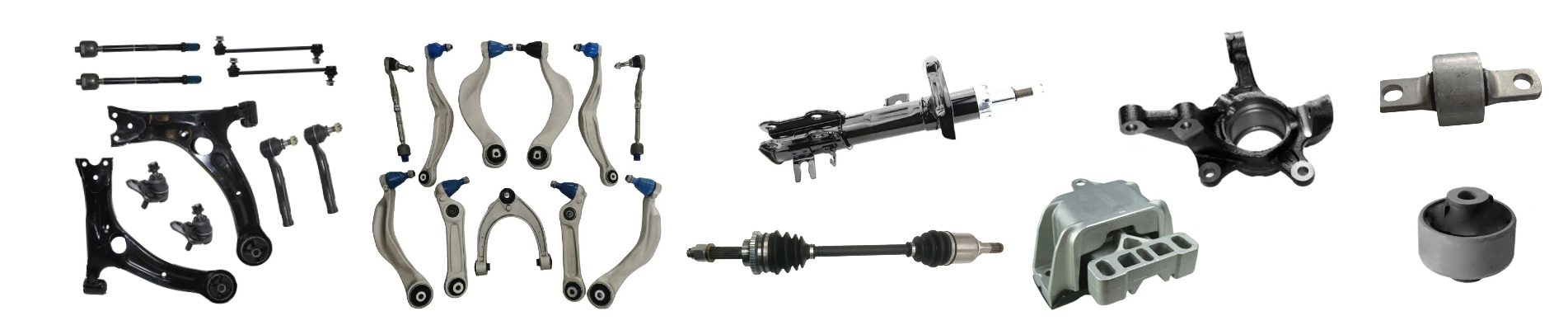
Your car’s suspension system is essential for a safe, comfortable drive. It smooths bumpy roads, stabilizes the vehicle during turns, absorbs road impacts, and keeps tires firmly grounded. A faulty suspension leads to rough rides, strange noises, and compromised driving safety for daily commutes and long trips.
A top question for all car owners is: How long do suspension parts last? Lifespan varies greatly depending on road conditions, driving habits, vehicle load, and regular maintenance. In this guide, we cover the average service life of key suspension parts, common wear warning signs, and practical maintenance tips to prolong component life.
A functional suspension system relies on interconnected components, each with a unique lifespan. Below are the most critical suspension components and their standard replacement mileage for regular passenger cars.
Factory-installed shocks and struts can last 100,000 miles under ideal smooth-road conditions, but frequent city and rough-road driving often requires replacement at 50,000 miles.
Control arms rarely fail, but worn bushings are common in vehicles over 5 years old. Replacing only bushings is a cost-effective alternative to full control arm replacement.
Sway bar links are among the most frequently replaced suspension parts, but they are affordable and easy to repair.
Worn ball joints pose serious safety risks, including potential wheel separation, so always inspect them during routine servicing.
Suspension lifespan varies drastically based on daily use. These key factors determine how long your suspension system will last:
Potholes, cracked pavement, gravel roads, and frequent speed bump crossings create constant impact stress, fatiguing shocks, struts, and joint parts. Smooth highway driving preserves suspension components far better than rough urban or rural roads.
Hard braking, fast cornering, reckless speed bump crossings, and off-roading put extreme strain on the entire suspension. Gentle, steady driving is the simplest way to extend suspension parts life.
Consistent overloading compresses shocks, springs, and bushings long-term, accelerating component wear and weakening the suspension’s cushioning ability.
Road salt, heavy rain, high humidity, and cold temperatures corrode metal suspension parts and dry out rubber seals and bushings, leading to faster wear in snowy or coastal areas.
Skipping suspension inspections, wheel alignment, and tire rotations turns minor wear into severe damage. Even slight misalignment can wear out multiple suspension components quickly.
Proactive maintenance avoids premature suspension failure and expensive repairs. Follow these key tips to maximize suspension parts lifespan:
Inspect shocks, struts, links, bushings, and ball joints every 10,000 miles or during oil changes. Check for leaks, cracks, rust, and damaged rubber parts to catch issues early.
Schedule a wheel alignment every 20,000 miles or after hitting large potholes/curbs. Rotate tires every 5,000–7,000 miles to ensure even wear and reduce uneven suspension stress.
Adhere to your vehicle’s weight limit, slow down for rough roads and speed bumps, and avoid high-speed sharp turns to minimize suspension strain.
Wash the car undercarriage regularly to remove corrosive road salt and dirt. Lubricate movable suspension joints during servicing to reduce friction wear.
Always replace shocks, struts, and sway bar links in front or rear pairs. Single-part replacement causes unbalanced suspension performance and accelerated opposite-side wear.
To answer how long do suspension parts last: most suspension components deliver 50,000–150,000 miles of service with proper care. Lifespan ultimately depends on your driving style and maintenance consistency.

PRONTO PARA UMA ASSINATURA?
Empresa SMK fornecer peças automotivas para abaixo peças de reposição para automóveis : Carro japonês: Toyota, Honda, Nissan, Mazda, Subaru, Mitsubishi, Suzuki, Isuzu ... Carro europeu: BMW, Benz, VW, Audi, Skoda, Porsche, Maserati, Renault, Peugeot , Citroën, Fiat, Opel, Land Rover ... Carro americano: Tesla, Ford, Chrysler , Cadillac , Buick , GMC, Chevrolet, Lincoln, Fiat, Dodge, ... Carro coreano: Hyundai, Kia, Daewoo ... Carros chineses: Chery, Geely, GreatWall, Haval, BYD, Changan, JAC... Nós fornecemos peças para o mundo todo: EUA, Canadá, Europa, México, Colômbia, Coreia... Somos o principal fornecedor das seguintes peças automotivas: Peças de suspensão e direção (braço de controle, barra de direção, barra estabilizadora...) Tesla Pós-venda P artes. Motor M contagem/transmissão M conta SMK Auto partes é projetado especificamente para o reparo automotivo partes Nossos componentes de chassi passam por rigorosos testes para suportar facilmente as complexas e variáveis condições climáticas e rodoviárias. Os produtos não só oferecem durabilidade excepcional, como também ampla compatibilidade e excelente estabilidade, garantindo suporte confiável e de longo prazo para seus veículos. Muitos clientes no exterior estabeleceram parcerias de longo prazo conosco. Com o contínuo acúmulo de recursos, muitos clientes no exterior nos confiam a produção de diversos tipos de peças automotivas. Para atender às diversas necessidades dos clientes, expandimos ativamente novas linhas de produtos. Seguimos altos padrões de fabricação, garantindo que cada produto atenda aos rigorosos requisitos de segurança e durabilidade de diferentes mercados. Convidamos clientes do mundo todo a escolher nossos produtos e fornecer proteção mais robusta e melhorias de desempenho para seus veículos! A SMK sempre se mantém centrada no cliente, aprimorando continuamente a qualidade dos produtos e os níveis de serviço, e se esforça para criar maior valor para clientes globais. No futuro, continuaremos aderindo ao princípio "qualidade em primeiro lugar, cliente em primeiro lugar" e trabalharemos lado a lado com nossos parceiros para construir um futuro melhor.
 Rede IPv6 suportada